
Architect in Témara and Harhoura
Between Rabat and Skhirat, the coastal strip is where villas and second homes are concentrated. Wind and salt shape a large part of the project long before aesthetics come into play.
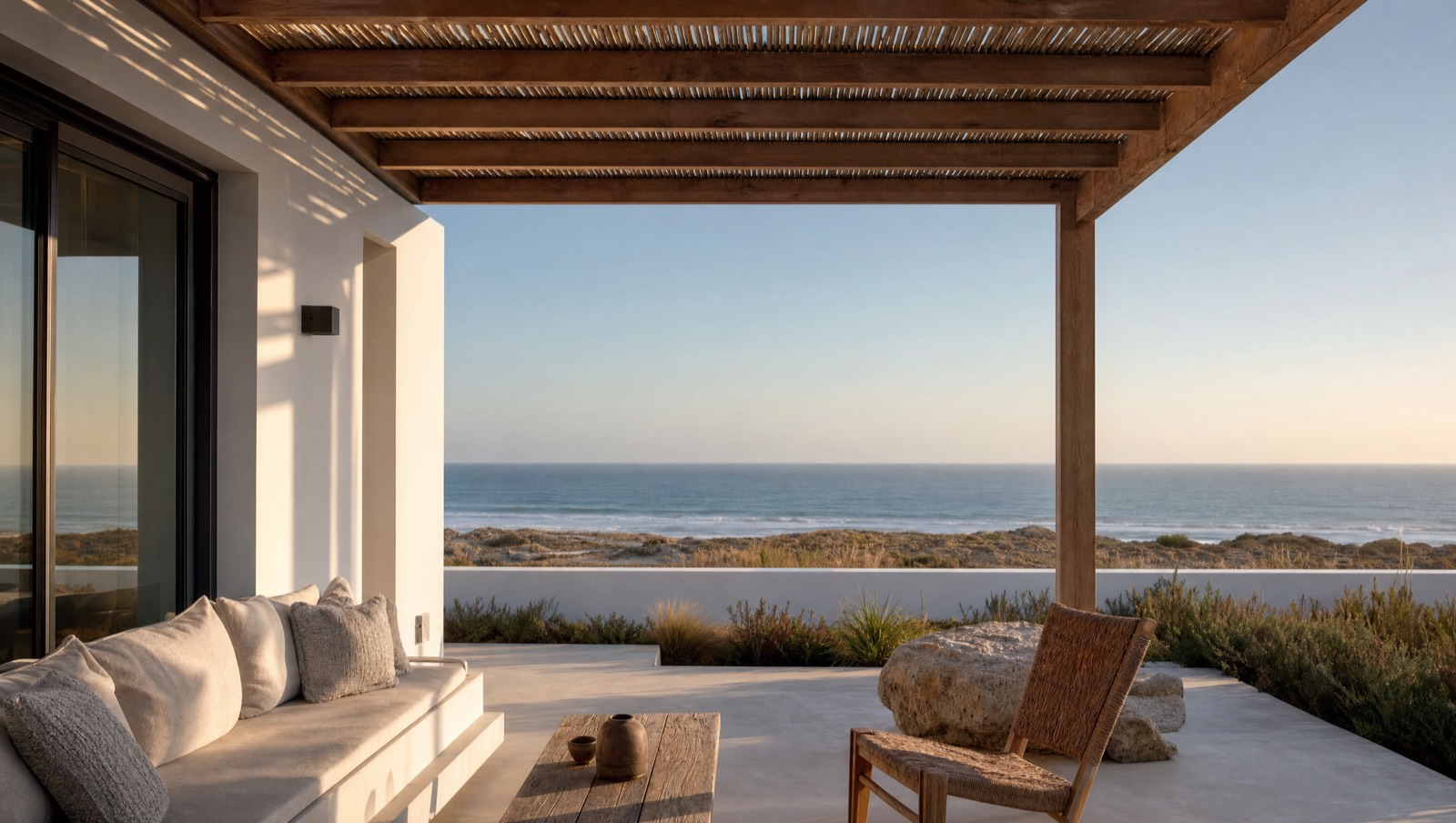
Outdoor living without battling the wind
On this coast, a terrace facing the ocean is the first thing everyone wants, and the first disappointment: it becomes unusable as soon as the wind picks up. The projects that work are built around a sheltered patio, protected by a solid wall and a pergola, treating the view as something framed from inside rather than as an exposed living space.
Sea air then dictates the materials: 316 stainless steel for exposed ironmongery, anodised aluminium, naturally durable timber, mineral renders. The extra cost on the trades concerned pays for itself in maintenance you never have to do.
Plots along the coast are often narrow and hemmed in by neighbours, so light has to come from above, through a patio or rooflights, rather than from the sides.
Harhoura, Sables d'Or, Skhirat
Harhoura and Sables d'Or: seafront or second-row villas, main residences and holiday homes. Coastal constraints at their strongest.
Témara centre, Massira, Guich Oudaya: a more conventional residential fabric, with extensions, added storeys and renovations. The method is set out in the case study on adding a storey to an existing house.
Oued Ykem and Skhirat: large plots, villas with pools, new-build projects. The situation described in seaside villa applies directly here.
What the practice handles
Review of planning rules and site survey, concept design, preliminary design, permit application through Rokhas, tendering to contractors, site supervision with written reports. Interior architecture and bespoke furniture can follow on from the same commission.
For new build in Rabat itself, see the dedicated page architect in Rabat; for interior fit-out, interior architect in Rabat.
The coast costs more on two items
As in Tangier, two items sit above the average: wind protection (walls, pergolas, reinforced joinery) and resistance to sea air. The rest of the budget follows the national ranges in the cost simulator.
Fees are those set out on the fees page, with an initial assessment of 1,500 to 2,500 MAD (Moroccan dirhams) deducted if the commission goes ahead.
What clients ask me most
Does the practice work in Témara and Harhoura?
Yes, across the whole coastal strip between Rabat and Skhirat: new villas, extensions, added storeys and renovations, with scheduled site meetings.
Which materials work best by the sea?
316 stainless steel for exposed ironmongery, anodised aluminium for windows and doors, naturally durable or treated timber, and mineral renders rather than film-forming paints. This is what saves you from redoing the façades every three years.
Can you build on the seafront in Harhoura?
It depends on the plot and the applicable regulations, as some strips are protected or subject to specific setbacks. The planning review is carried out before purchase, based on the titre foncier (land title) and the official planning information note.
How much does an architect cost in Témara?
Around 8 to 12% of the construction cost for a full commission, or a fixed fee of 15,000 to 40,000 MAD for design and permit work on a villa of 150 to 200 m².
Tell me about your project in Témara
Seafront plot, extension or renovation: you receive an initial architect's assessment and a budget framework.
A reply as soon as possible