
Interior architect in Tangier
In Tangier, a successful interior comes down to two things the rest of Morocco does not face to the same degree: framing the view without turning the room into a wall of glass, and choosing materials that can cope with sea air.
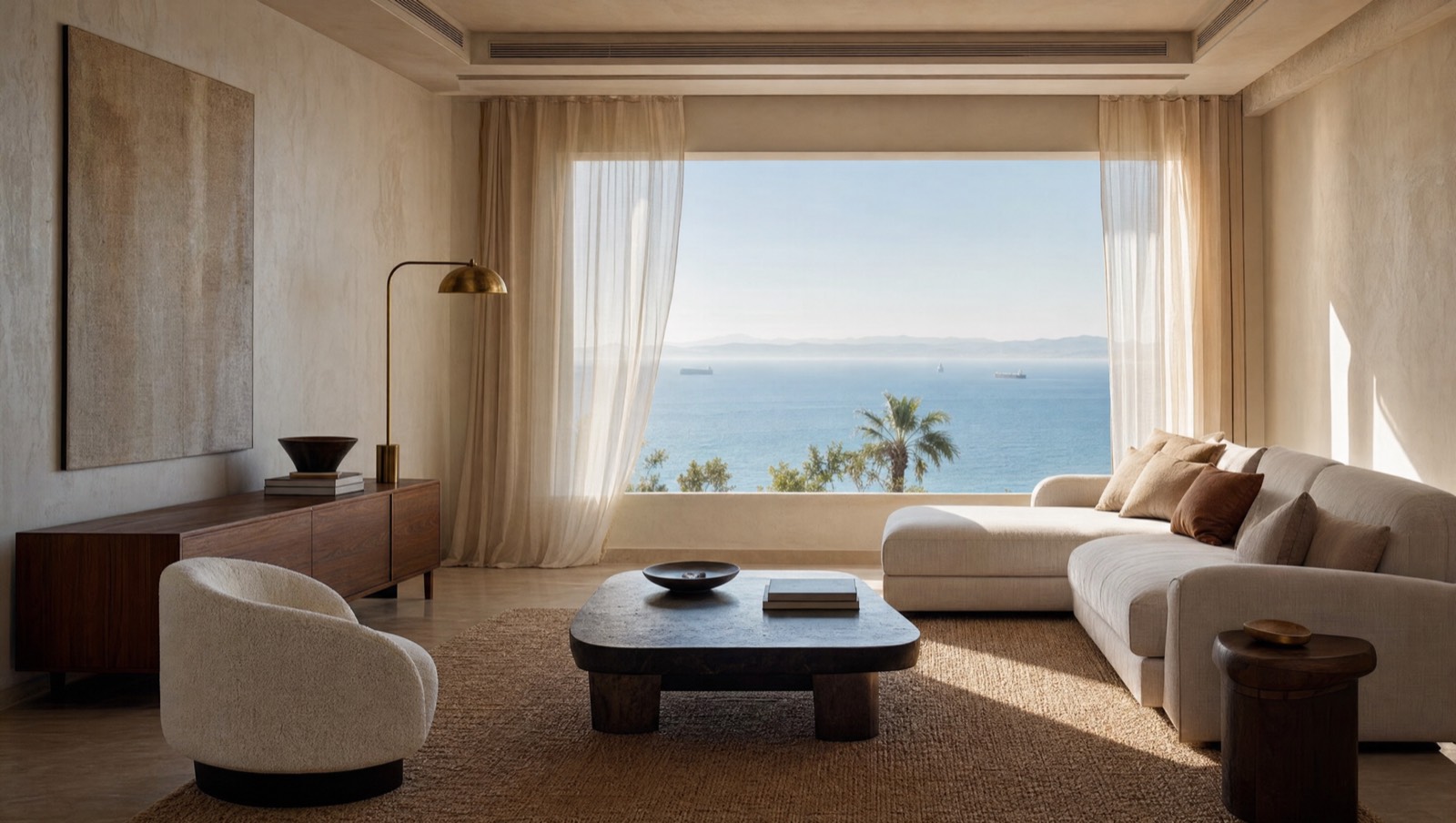
What the sea demands of an interior
The view is the selling point of almost every property in Tangier, and it is also the first trap. An unprotected window turns the living room into a furnace in the afternoon and bleaches the textiles within two seasons. So the reveal is where the work happens: depth, returns, lined technical curtains, and a framing that gives the sea the presence of a painting rather than a wall.
Sea air, in turn, does not stop at the façade. Indoors, it attacks untreated metals, dulls unlacquered brass and swells chipboard panels in wet rooms. Those decisions are made early: brushed stainless steel or lacquered brass rather than raw, moisture-resistant panels, vapour-permeable paints, textiles with hard-wearing fibres.
Finally, many properties are second homes occupied a few weeks a year. That changes the brief: closed storage to keep dust out, robust furniture, a kitchen that is simple to bring back into service, and a design that can withstand months of being left empty.
Where the projects are
Malabata and the corniche: apartments and villas with a sea view, main residences and holiday homes, often handed over as bare shells by the developer.
Marshan and Iberia: older buildings with generous volumes, major renovations where the challenge is as much technical (services, damp) as decorative.
Boubana and the outskirts: family villas, kitchens and bathrooms to be reworked, interior extensions.
City centre and Tangier City Center: retail spaces, professional practices and offices. The practice designed and fitted out the My Laser centre in Tangier, which can be visited while in operation.
Making decisions quickly, even from a distance
Many owners do not live in Tangier. In that case the process is the same as the one described in the turnkey apartment case study: a single approval document kept up to date, material boards photographed in natural light, samples shipped out when the material matters, a weekly call and a photo report from the site.
On site, the sequence remains classic: survey and assessment, layout plan, materials and lighting, bespoke joinery limited to the pieces that structure the space, then the works, with snagging and handover.
What a commission costs in Tangier
Interior architecture fees range from 10 to 20% of the value of the works, with an initial assessment of 1,500 to 2,500 MAD (Moroccan dirhams), deducted if the commission goes ahead. Full details are on the fees page.
As for the works, the item that stands out locally is joinery: at equal quality, joinery specified for sea air costs more than its inland equivalent, and that is exactly what saves you from redoing everything three years later. For new-build projects and permits, see the dedicated architect in Tangier page.
What clients ask me most
How much does an interior architect cost in Tangier?
Between 10 and 20% of the value of the works, depending on the scope of the commission. An initial assessment costing 1,500 to 2,500 MAD sets the framework for the project and is deducted if the commission goes ahead.
Can an apartment be fitted out without me being there?
Yes. The practice works with a single approval document, photographed material boards, samples shipped to you and a weekly photo report from the site. This is the most common format for non-resident owners.
Which materials hold up best by the sea in Tangier?
Indoors: moisture-resistant panels in wet rooms, lacquered metals or brushed stainless steel rather than raw brass, vapour-permeable paints, textiles with hard-wearing fibres. Everything else is a matter of the usual aesthetic choices.
How long does fitting out an apartment take?
Roughly four to six months between an approved plan and moving in, allowing for the eight to ten weeks needed to make bespoke furniture.
Tell me about your interior in Tangier
Send your plan, photos and the budget you have in mind: you will receive an initial architect's assessment and an outline of a commission suited to your project, even remotely.
A reply as soon as possible